

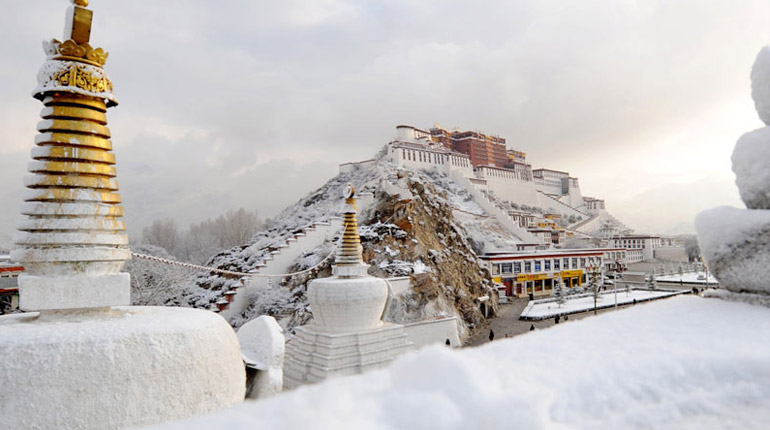
 Potala Palace in Winter
Is January a good time to visit Tibet? While many travelers dismiss the first month of the year as too cold or inaccessible, January is actually one of Tibet’s best-kept secrets. It offers incredibly crisp skies, unparalleled visibility of the Himalayas, and a deeply authentic cultural experience devoid of summer tourist crowds.
If you want to experience the true soul of the "Roof of the World" without the commercial rush, a winter journey might be exactly what you are looking for. Here is a definitive guide to Tibet’s weather, regional temperatures, packing essentials, and travel tips for January.
January falls squarely in Tibet's deep winter. It is characterized by dry air, minimal rainfall, roaring sunshine during the day, and freezing temperatures at night.
A common misconception is that Tibet is entirely buried under snow in January. In reality, central Tibet—including Lhasa and Shigatse—sees very little snowfall because the air is too dry. Instead, you can expect over 20 to 25 days of bright, unobstructed sunshine. However, the diurnal temperature variation (the gap between day and night) is massive. While daytime temperatures can feel quite comfortable under the intense plateau sun, they plummet instantly once the sun sets.
| Region/City | Avg Low Temperature | Avg High Temperature | Average Rainfall | Weather Characteristics |
| Lhasa | -7°C / 19°F | 8°C / 46°F | 0.5 mm | Sunny, bright days; freezing, windy nights |
| Shigatse | -12°C / 10°F | 7°C / 45°F | 0.4 mm | Cold and exceptionally dry; clear skies |
| Nyingchi | -5°C / 23°F | 9°C / 48°F | 2.0 mm | Mildest region; valley areas remain pleasant |
| Everest Base Camp | -15°C / 5°F | 4°C / 39°F | 0.0 mm | Extreme cold; high winds; 99% clear mountain views |
| Nam Tso | -20°C / -4°F | -3°C / 26°F | 1.0 mm | Completely frozen; frequently blocked by mountain snow |
Tibet's vast geography means weather conditions vary dramatically from the lower valleys to the high-altitude wilderness.
Lhasa is often called the "Sunlight City," and January proves why. During the day, sitting outside the Jokhang Temple or walking around the Barkhor Circuit feels warmer than winter in London or New York because the high-altitude sun hits you directly. Rain is practically non-existent. Shigatse is slightly colder but follows the same sunny, dry pattern. It is the perfect month for indoor monastery tours, drinking sweet tea with locals, and cultural photography.
If your main goal is to photograph Mount Everest, **January is one of the absolute best months of the year**. In July and August, the peak is frequently swallowed by monsoon clouds. In January, the dry continental air currents sweep away the moisture, giving you a crystal-clear, unobstructed view of Everest's North Face.
While daytime temperatures at EBC hover around 4°C (39°F), night temperatures can violently drop to -20°C (-4°F) or lower, accompanied by fierce winds. You must ensure your tour operator arranges accommodations with reliable heating or thermal electric blankets.
We believe in honest travel advice: **January is not the time to visit Mount Kailash or Lake Namtso.** To reach Lake Namtso, vehicles must cross the Nachenla Pass at an elevation of 5,190 meters. In January, this pass is frequently blocked by heavy, un-cleared snowstorms, making the drive highly dangerous or physically impossible. Similarly, the remote Ngari region (Mount Kailash) is gripped by arctic conditions, and the kora trekking routes are closed.
The secret to staying comfortable in Tibet during January is the "Three-Layer System". Because you will transition constantly between the warm daytime sun and freezing indoor environments (many historical monasteries do not have central heating), you need adjustable layers.
Base Layer (Moisture-Wicking): High-quality thermal underwear (merino wool is highly recommended). Avoid cotton, as it traps sweat and cools you down.
Middle Layer (Insulation): A thick fleece jacket, wool sweater, or a lightweight down sweater.
Outer Layer (Weather Protection): A heavy-duty, windproof, waterproof down winter coat or a professional ski jacket.
Bottoms: Thermal leggings paired with windproof hiking pants or thick jeans.
UV & Eye Protection: The winter sun reflecting off dry landscapes or distant snow creates intense glare. UV-blocking sunglasses are non-negotiable to prevent snow blindness.
Head & Hands: A thermal beanie that covers your ears, a windproof scarf or neck gaiter, and insulated gloves.
Skincare: The air in January is brutal on skin. Pack high-SPF sunscreen, heavy-duty lip balm, and deep-moisturizing lotion to prevent your skin from cracking.
Evaluating a winter trip requires weighing the authentic experiences against the natural challenges of the climate.
The "Winter Tour Tibet" Discounts: To promote winter tourism, local authorities frequently offer massive perks, including free or half-price admission to the Potala Palace and major monasteries, alongside heavily discounted flights and hotel rates.
Zero Crowds: You won’t have to fight through tightly packed tour groups. You can explore sacred spaces at your own pace.
Authentic Tibetan Vibe: Summer brings domestic tourists; winter brings "Tibetan pilgrims". Thousands of farmers and nomads travel from remote regions to Lhasa in the winter after the harvest. You will witness genuine spiritual devotion, traditional dresses, and local festivals.
Low Oxygen Levels: Because there is less green vegetation in winter, the oxygen content in Tibet’s air drops by roughly 10% compared to summer. Acclimatization to the altitude ($3,650\text{m}+$ in Lhasa) may take a bit longer, and your body will feel the exertion faster.
Extreme Night Cold: If you cannot tolerate freezing temperatures after dark, the nightlife options will feel very limited.
Closed Routes: High-altitude trekking and northern loop tours are completely off the table due to ice and snow hazards.
Physiologically, yes, it can feel slightly more intense. The lack of active plant life means oxygen saturation in the atmosphere drops. To combat this, budget at least 48 hours of pure rest in Lhasa when you arrive. Do not take a shower on your first night, drink plenty of water, and avoid alcohol.
It rarely snows in Lhasa during January. Lhasa sits in a dry river valley. When precipitation does occur in winter, it usually drops light snow on the surrounding mountain peaks rather than inside the city center.
Yes, major tourist hotels and restaurants in Lhasa and Shigatse remain fully operational. Many high-end hotels feature oxygen-enriched rooms and floor heating systems specifically designed for winter guests. However, budget guesthouses in remote areas like Everest Base Camp may scale back operations or close their standard tents, moving guests to more solid guesthouse structures.
January offers an intimate look at Tibet that 90% of tourists never get to see. Ready to map out your journey? Connect this guide back to our Tibet Weather and Temperature Overview to compare January with other winter months, or check out our customized winter itineraries.
Contact our local experts for free consultation on permits and itinerary planning.
 Group Tours
Experience the ultimate Tibet adventure. This 8-day tour takes you from the historic Potala Palace in Lhasa to the majestic North Face of Mt. Everest (5,200m). Explore Yamdrok Lake, Gyantse, and Shigatse with local expert guides. Small groups and private tours available.
From$930
View Details Group Tours
Embark on a legendary 7-day Himalayan overland tour from Lhasa to Kathmandu. Experience the Potala Palace, holy Lake Yamdrok, and an unforgettable night at Everest Base Camp before descending into Nepal. Daily departures, expert local Tibetan guides, and guaranteed Tibet permits.
From$930
View Details